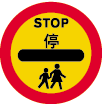
Crossing aids are often provided to help you cross busy roads. If there is a crossing place nearby, use it even though you have to walk further to do so.
Your safety when using crossing places depends upon whether you are following Steps 2 to 6 of the Road Crossing Code and using the crossing in the correct way. Follow the rules and advice given in this chapter. You do not need to follow the Road Crossing Code only when using a footbridge or subway.
|
Rules and advice on crossing places |
| Footbridges - this page. Subways - this page. Crossings controlled by authorised persons - this page. 'Zebra' crossings - opposite page. 'Green man' crossings - Page 16. Crossing places at traffic light junctions - pages 18 and 19. Crossing with Islands - Page 10. |
Footbridges and subways
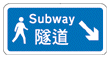
Direction sign showing entrance to subway
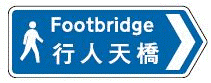
Direction sign showing entrance to footbridge
Footbridges, subways and elevated walkways are the safest places to cross busy roads as they keep pedestrians well away from the dangers of traffic.
They are normally sited at very busy places where crossing the road at-grade would be particularly dangerous or difficult.
If you are unable to use a footbridge or subway because you cannot go up and down the steps, try to find an alternative pedestrian crossing at other place. Many footbridges and subways have ramps, lifts or escalators in addition to steps.
You must not cross the road within 15 metres of a footbridge or subway. You must use the footbridge or subway if you wish to cross.